Meeting Highlights
october 2025
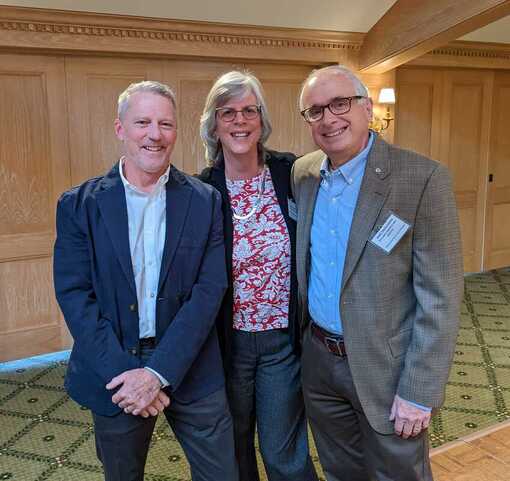
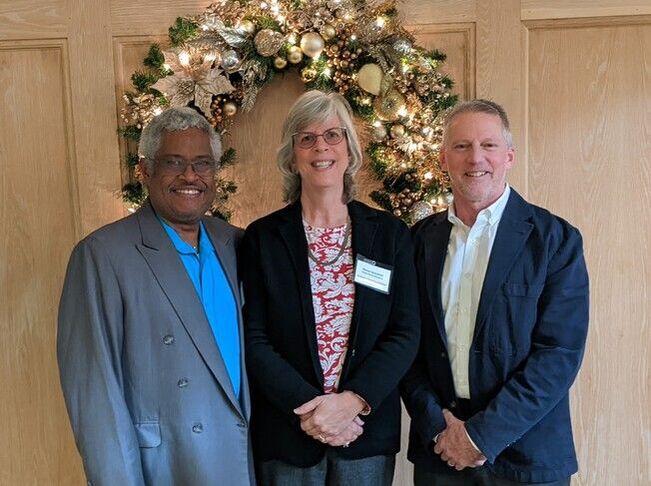
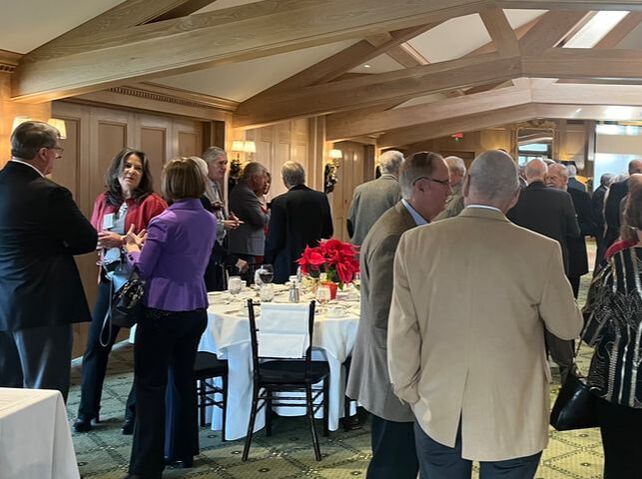
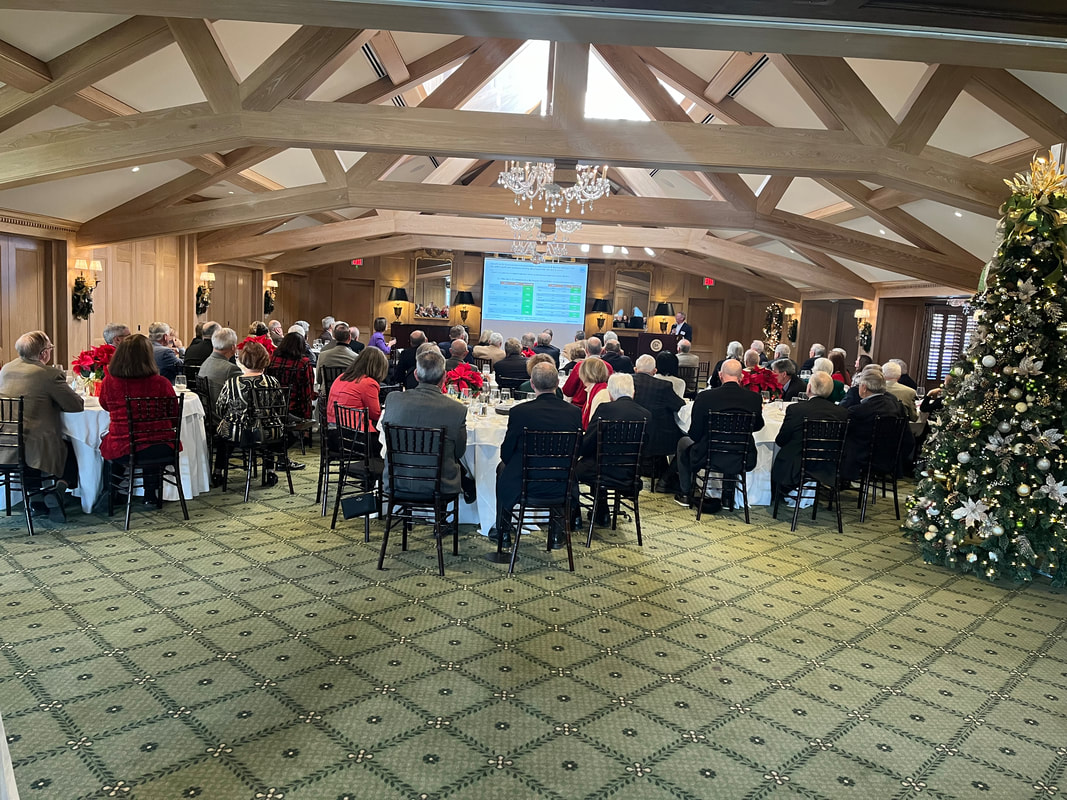
We were pleased to welcome two respected voices in the automotive world — industry journalist and analyst Michelle Krebs, and our own club member Adam Bernard, also an analyst and industry journalist — for a compelling Fireside Chat at today’s luncheon.
Adam served as moderator, guiding the conversation with thoughtful questions that drew on Michelle’s decades of experience covering the auto industry.
Michelle shared candid insights, reflections, and anecdotes from her career. Her remarks represented personal views and touched on a range of historic and current issues shaping the automotive landscape.
Key Takeaways from Michelle Krebs’ Responses
Reflections on GM Leadership:
Michelle highlighted the bold — and at times controversial — decisions made during Roger Smith’s tenure as GM Chairman and CEO. His acquisition of EDS and early investments in technology and machine learning were forward-thinking, seen in hindsight as precursors to today’s conversations around AI in the automotive sector.
Remembering Sergio Marchionne:
The unexpected death of Sergio Marchionne, then-CEO of Fiat Chrysler Automobiles, left a significant void in the industry. He passed away due to complications from shoulder surgery — a shocking loss of a visionary leader widely respected for his transformative impact.
Mary Barra’s Historic Appointment:
Michelle reflected on the groundbreaking appointment of Mary Barra as CEO of GM. She noted her initial surprise, remarking that many expected the U.S. to elect a female president before GM would name a female CEO. In a later interview, Michelle found Barra warm and candid when discussing personal matters like family, though more reserved when it came to corporate issues.
Memorable Interviews:
Among the many industry leaders Michelle has interviewed, she cited Bill Hoglund (former GM CFO and confidant of Jack Smith) and Roger Smith as particularly insightful subjects, offering a rare glimpse into GM’s internal dynamics during pivotal periods.
Industry Resilience & Surprises:
Michelle discussed how the auto industry has demonstrated remarkable resilience through major disruptions:
OEM Consolidation & Impact of Tariffs:
With the increasing impact of tariffs, companies—particularly suppliers—are being compelled to consolidate. The transition to new technologies is already prohibitively expensive for many to manage independently, and tariffs have only intensified this burden by disrupting production planning and complicating efficient supply chain management. While the industry has managed to absorb some of these pressures so far, the effects of tariffs take time to fully work through the system—likely another two years before the full impact is felt. The most immediate challenge, however, is the uncertainty. No one knows where tariffs are headed, and that unpredictability is making it extremely difficult to plan for products, investments, and supply chain strategies. In this environment, collaboration and consolidation are becoming not just strategic choices, but necessities for long-term survival and competitiveness.
EV Evolution & Technology Outlook:
The future of EVs remains uncertain, shaped by geopolitical dynamics and cost-related concerns. Affordability is a key barrier — especially for younger consumers who face rising living costs, student debt, and housing challenges. Michelle stressed the need for a compelling value proposition to drive EV adoption, which she sees progressing slowly.
Autonomous vehicles face similar headwinds, primarily due to regulatory hurdles and consumer hesitation. However, she highlighted Super Cruise as an exceptional innovation that has seen strong consumer interest and uptake.
Auto Shows: A Diminishing Platform:
The traditional large-scale auto show model (e.g., Detroit, Chicago, etc.) is unlikely to return to its former prominence. High costs and shifting marketing priorities have led manufacturers to reallocate budgets toward more targeted, digital, or experiential initiatives.
New Vehicle Financing Trends:
No significant innovation has occurred recently in new vehicle financing. Leasing has declined in favor of ownership, and Michelle believes this reflects a broader cultural preference: “We are an ownership society.”
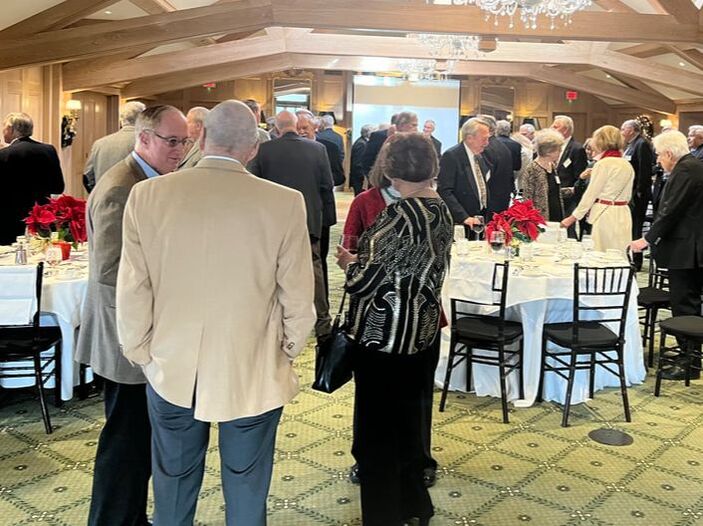
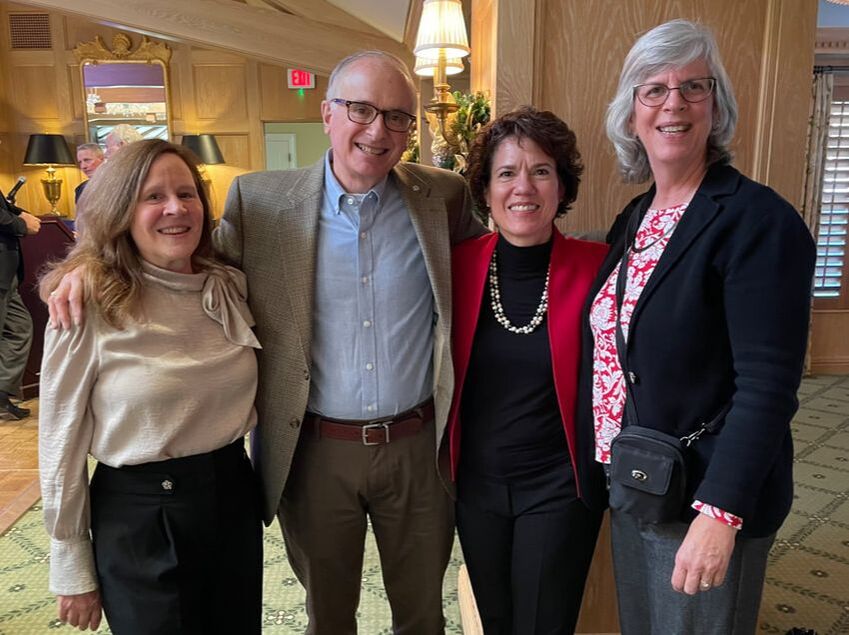
We’re grateful to Michelle Krebs for sharing her time, stories, and deep industry knowledge — and to Adam Bernard for skillfully moderating the conversation. Events like these remind us of the strength and value of our community of professionals and enthusiasts.
Adam served as moderator, guiding the conversation with thoughtful questions that drew on Michelle’s decades of experience covering the auto industry.
Michelle shared candid insights, reflections, and anecdotes from her career. Her remarks represented personal views and touched on a range of historic and current issues shaping the automotive landscape.
Key Takeaways from Michelle Krebs’ Responses
Reflections on GM Leadership:
Michelle highlighted the bold — and at times controversial — decisions made during Roger Smith’s tenure as GM Chairman and CEO. His acquisition of EDS and early investments in technology and machine learning were forward-thinking, seen in hindsight as precursors to today’s conversations around AI in the automotive sector.
Remembering Sergio Marchionne:
The unexpected death of Sergio Marchionne, then-CEO of Fiat Chrysler Automobiles, left a significant void in the industry. He passed away due to complications from shoulder surgery — a shocking loss of a visionary leader widely respected for his transformative impact.
Mary Barra’s Historic Appointment:
Michelle reflected on the groundbreaking appointment of Mary Barra as CEO of GM. She noted her initial surprise, remarking that many expected the U.S. to elect a female president before GM would name a female CEO. In a later interview, Michelle found Barra warm and candid when discussing personal matters like family, though more reserved when it came to corporate issues.
Memorable Interviews:
Among the many industry leaders Michelle has interviewed, she cited Bill Hoglund (former GM CFO and confidant of Jack Smith) and Roger Smith as particularly insightful subjects, offering a rare glimpse into GM’s internal dynamics during pivotal periods.
Industry Resilience & Surprises:
Michelle discussed how the auto industry has demonstrated remarkable resilience through major disruptions:
- The financial crisis
- The COVID-19 pandemic
- Key lessons learned from earlier shocks such as the 2011 Japanese tsunami, particularly around supply chain vulnerabilities.
OEM Consolidation & Impact of Tariffs:
With the increasing impact of tariffs, companies—particularly suppliers—are being compelled to consolidate. The transition to new technologies is already prohibitively expensive for many to manage independently, and tariffs have only intensified this burden by disrupting production planning and complicating efficient supply chain management. While the industry has managed to absorb some of these pressures so far, the effects of tariffs take time to fully work through the system—likely another two years before the full impact is felt. The most immediate challenge, however, is the uncertainty. No one knows where tariffs are headed, and that unpredictability is making it extremely difficult to plan for products, investments, and supply chain strategies. In this environment, collaboration and consolidation are becoming not just strategic choices, but necessities for long-term survival and competitiveness.
EV Evolution & Technology Outlook:
The future of EVs remains uncertain, shaped by geopolitical dynamics and cost-related concerns. Affordability is a key barrier — especially for younger consumers who face rising living costs, student debt, and housing challenges. Michelle stressed the need for a compelling value proposition to drive EV adoption, which she sees progressing slowly.
Autonomous vehicles face similar headwinds, primarily due to regulatory hurdles and consumer hesitation. However, she highlighted Super Cruise as an exceptional innovation that has seen strong consumer interest and uptake.
Auto Shows: A Diminishing Platform:
The traditional large-scale auto show model (e.g., Detroit, Chicago, etc.) is unlikely to return to its former prominence. High costs and shifting marketing priorities have led manufacturers to reallocate budgets toward more targeted, digital, or experiential initiatives.
New Vehicle Financing Trends:
No significant innovation has occurred recently in new vehicle financing. Leasing has declined in favor of ownership, and Michelle believes this reflects a broader cultural preference: “We are an ownership society.”
We’re grateful to Michelle Krebs for sharing her time, stories, and deep industry knowledge — and to Adam Bernard for skillfully moderating the conversation. Events like these remind us of the strength and value of our community of professionals and enthusiasts.
September 2025
Dick Ruzzin shared the history of those things we may have taken for granted in the process of vehicle design. We learned about the transition from the early days of recruiting anyone with an inclination to design, sleeping in the hallway of the GM building to stretch the workday, and not having customer feedback, to…
- Harley Earl’s groundbreaking role in creating the design profession at GM, which included establishing design studios, introducing the concept car, and setting the standard for automotive style and luxury.
- His visionary approach to streamlined aesthetics, color innovation, and brand identity laid the foundation for modern car design.
- The recruitment of Ned Nichols, a former paper plant night watchman who spent the quiet hours of his shift sketching vehicles and left everything behind when he got a bus ticket from GM to Detroit.
- The legendary “Mac” – Clair McKichen, who established European design centers.
- The development of the Total Automotive System Concept (TASC).
- The shift from BOF to BFI and FWD.
- The origin of the seating buck, clay models, and working prototypes.
- Unique selling points, such as luggage space and small family cars for Buick and Chevrolet.
- Minivan research – how a spy photo on Auto Week of GM’s concept triggered the launch of the concept for Chrysler.
- Small block engines in racing.
- Aero modeling and best practices.
august 2025
Christine Krathwohl, Senior Vice President and President of Distribution at Freight Verify, joined us to share her insights and experience in the logistics industry. With a distinguished 30-year career that includes leadership roles at Ford, General Motors, and now Freight Verify, Christine brought a unique perspective on the evolution of supply chain innovation.
GM began its engagement with Freight Verify in 2017 and established a strategic partnership just one year later. Since then, Freight Verify has introduced several groundbreaking innovations in supply chain visibility and significantly expanded its customer base across both domestic and imported vehicle OEM’s. Key developments include:
VINView: Provides VIN-level tracking of finished vehicles, leveraging AI-driven estimated times of arrival (ETAs) from plant to dealer across all transportation modes (vessel, rail, and truck) in the U.S. and Canada.
- Currently supports ~11,500 dealers and over 60,000 users.
Dealer Pickup: A solution that enhances dealer logistics by enabling vehicle pickup to meet urgent customer requirements.
- Over 225,000 vehicles have been requested for pickup since the program's launch in 2022.
PartView: Empowers dealer service departments to track inbound parts with AI-driven ETAs.
- Adopted by ~4,500 dealerships with over 20,000 active users.
DamageView: Enables OEMs to identify damaged outbound inventory and take timely action, complete with damage location data and photographic evidence.
Christine’s insights into the evolution of logistics and the importance of supply chain visibility were both inspiring and informative. We greatly appreciated her sharing the journey of Freight Verify’s technological advancements and the tangible impact they are making in the industry.
We extend our sincere thanks to Christine for her visit and for providing a deeper understanding of how Freight Verify is shaping the future of logistics. Her leadership continues to drive innovation and strategic collaboration that improves efficiency, transparency, and customer satisfaction across the supply chain.
GM began its engagement with Freight Verify in 2017 and established a strategic partnership just one year later. Since then, Freight Verify has introduced several groundbreaking innovations in supply chain visibility and significantly expanded its customer base across both domestic and imported vehicle OEM’s. Key developments include:
VINView: Provides VIN-level tracking of finished vehicles, leveraging AI-driven estimated times of arrival (ETAs) from plant to dealer across all transportation modes (vessel, rail, and truck) in the U.S. and Canada.
- Currently supports ~11,500 dealers and over 60,000 users.
Dealer Pickup: A solution that enhances dealer logistics by enabling vehicle pickup to meet urgent customer requirements.
- Over 225,000 vehicles have been requested for pickup since the program's launch in 2022.
PartView: Empowers dealer service departments to track inbound parts with AI-driven ETAs.
- Adopted by ~4,500 dealerships with over 20,000 active users.
DamageView: Enables OEMs to identify damaged outbound inventory and take timely action, complete with damage location data and photographic evidence.
Christine’s insights into the evolution of logistics and the importance of supply chain visibility were both inspiring and informative. We greatly appreciated her sharing the journey of Freight Verify’s technological advancements and the tangible impact they are making in the industry.
We extend our sincere thanks to Christine for her visit and for providing a deeper understanding of how Freight Verify is shaping the future of logistics. Her leadership continues to drive innovation and strategic collaboration that improves efficiency, transparency, and customer satisfaction across the supply chain.
july 2025
We were excited to have Sarah Hughes join us to talk about all things AI. Sarah is the Senior Manager of Enterprise Innovation, AI Portfolio & Program Management at GM. With a background in engineering, market research, program management, strategic planning, and innovation, Sarah brings a comprehensive skillset to this new role and organization.
Sarah began her talk with a quiz about our feelings toward Artificial Intelligence. She explained the evolution of tools at GM from basic algorithms that find patterns in data (machine learning) to multi-layered neural networks that can learn complex representations (deep learning) to systems that can reason, understand, and perform diverse cognitive tasks (AI). Sarah highlighted key AI opportunities in hardware and software development, as well as in better understanding customer expectations and accelerating the development process. Key challenges include governance issues around managing the technology versus being managed by the technology.
There are many places in day-to-day work at GM where AI is being used to add value: Vehicle Design, Manufacturing, Legal, Marketing, Purchasing, Finance, and Software Development.
Sarah finished by explaining how individuals can use AI every day to:
- Stay Informed - news summaries and industry trends
- Advise and Mentor - review business plans, draft insights
- Communicate - write speeches, posts and emails
- Explore Tech - stay current on innovation
- Boost Productivity - plan travel, organize files, automate tasks
- Preserve Legacy - record stories, create digital archives
Some AI tools you may want to try are Chat GPT, Gemini, and CoPilot. Sarah also noted that AI training is available online through Google.
Sarah began her talk with a quiz about our feelings toward Artificial Intelligence. She explained the evolution of tools at GM from basic algorithms that find patterns in data (machine learning) to multi-layered neural networks that can learn complex representations (deep learning) to systems that can reason, understand, and perform diverse cognitive tasks (AI). Sarah highlighted key AI opportunities in hardware and software development, as well as in better understanding customer expectations and accelerating the development process. Key challenges include governance issues around managing the technology versus being managed by the technology.
There are many places in day-to-day work at GM where AI is being used to add value: Vehicle Design, Manufacturing, Legal, Marketing, Purchasing, Finance, and Software Development.
Sarah finished by explaining how individuals can use AI every day to:
- Stay Informed - news summaries and industry trends
- Advise and Mentor - review business plans, draft insights
- Communicate - write speeches, posts and emails
- Explore Tech - stay current on innovation
- Boost Productivity - plan travel, organize files, automate tasks
- Preserve Legacy - record stories, create digital archives
Some AI tools you may want to try are Chat GPT, Gemini, and CoPilot. Sarah also noted that AI training is available online through Google.
june 2025
We were honored to welcome Dr. Robert K. McMahan, President of Kettering University, as our featured guest speaker. His presentation, “Today’s Kettering and the Future of Higher Education,” was both provocative and deeply thought-provoking.
Dr. McMahan began by highlighting the distinctive qualities of a Kettering education, grounded in STEM (Science, Technology, Engineering, and Mathematics) and Business. He shared key facts that illustrate the university’s unique approach:
- ~2,000 students enrolled
- 12 undergraduate degrees across 8 academic programs
- 17 graduate degrees with over 40 concentrations and minors
- A mandatory co-op program alternating 11-week academic terms with 12-week professional work terms
- Students graduate with an average of 2.5 years of professional experience
- Co-op students earn, on average, $75,000 over the course of their work terms
- More than 400 co-op partners nationwide
- Ranked among the top 10 private universities in the U.S. for return on investment, career earnings, and advancement
Dr. McMahan concluded by challenging the current state of higher education in the United States. He argued that the traditional model—a four-year, textbook-driven experience—is outdated, likening it to a 19th-century system trying to serve a 21st-century world. He emphasized the urgent need for higher education to evolve by more closely integrating with industry, ensuring students gain relevant, real-world experience.
He also noted Kettering’s leadership in Artificial Intelligence (AI) education, emphasizing how the university is preparing students not only to work with AI but to maintain and grow their value in an AI-driven economy.
Dr. McMahan’s presentation offered a compelling vision of what higher education can and should become.
If you're a Kettering/GMI alum and want to stay connected—whether through receiving the latest university news, getting involved, or including Kettering in your charitable giving plans—please reach out to Jennifer Patterson, Vice President of Advancement, at [email protected].
Dr. McMahan began by highlighting the distinctive qualities of a Kettering education, grounded in STEM (Science, Technology, Engineering, and Mathematics) and Business. He shared key facts that illustrate the university’s unique approach:
- ~2,000 students enrolled
- 12 undergraduate degrees across 8 academic programs
- 17 graduate degrees with over 40 concentrations and minors
- A mandatory co-op program alternating 11-week academic terms with 12-week professional work terms
- Students graduate with an average of 2.5 years of professional experience
- Co-op students earn, on average, $75,000 over the course of their work terms
- More than 400 co-op partners nationwide
- Ranked among the top 10 private universities in the U.S. for return on investment, career earnings, and advancement
Dr. McMahan concluded by challenging the current state of higher education in the United States. He argued that the traditional model—a four-year, textbook-driven experience—is outdated, likening it to a 19th-century system trying to serve a 21st-century world. He emphasized the urgent need for higher education to evolve by more closely integrating with industry, ensuring students gain relevant, real-world experience.
He also noted Kettering’s leadership in Artificial Intelligence (AI) education, emphasizing how the university is preparing students not only to work with AI but to maintain and grow their value in an AI-driven economy.
Dr. McMahan’s presentation offered a compelling vision of what higher education can and should become.
If you're a Kettering/GMI alum and want to stay connected—whether through receiving the latest university news, getting involved, or including Kettering in your charitable giving plans—please reach out to Jennifer Patterson, Vice President of Advancement, at [email protected].
may 2025
At our May meeting, we were pleased to welcome Mathew Rudnick, GM’s Director of Climate, Environment & Energy Policy, as our guest speaker. Matt delivered an insightful and comprehensive presentation that addressed a wide range of key topics influencing the company’s strategic direction and performance.
Matt's presentation included:
- An overview of GM’s U.S. manufacturing and economic footprint
- Strategic investments across internal combustion engine (ICE), electric vehicle (EV), and autonomous vehicle (AV) platforms
- GM’s vision for expanding its Super Cruise technology and overall product portfolio
- A review of GM’s Q1 2025 U.S. sales and financial results
- Brand-specific highlights and divisional performance updates
- 2025 business guidance, including commentary on the current tariff environment
- The scope of GM’s national presence, including manufacturing sites, workforce distribution, and dealer network
- Ongoing efforts to grow and leverage the EV portfolio
- GM’s evolving AV strategy and recent alignment initiatives
Matt’s depth of knowledge and openness were greatly appreciated. The Q&A session featured thoughtful and challenging questions from our members, making it a highly engaging and informative experience for all in attendance.
Matt's presentation included:
- An overview of GM’s U.S. manufacturing and economic footprint
- Strategic investments across internal combustion engine (ICE), electric vehicle (EV), and autonomous vehicle (AV) platforms
- GM’s vision for expanding its Super Cruise technology and overall product portfolio
- A review of GM’s Q1 2025 U.S. sales and financial results
- Brand-specific highlights and divisional performance updates
- 2025 business guidance, including commentary on the current tariff environment
- The scope of GM’s national presence, including manufacturing sites, workforce distribution, and dealer network
- Ongoing efforts to grow and leverage the EV portfolio
- GM’s evolving AV strategy and recent alignment initiatives
Matt’s depth of knowledge and openness were greatly appreciated. The Q&A session featured thoughtful and challenging questions from our members, making it a highly engaging and informative experience for all in attendance.
april 2025 - pass the mic
At our April luncheon, we had the privilege of shining a spotlight on the incredible careers of our members, as they shared their unique experiences, wisdom, and stories from their time at GM. We were honored to have six members, along with the spouse of one of our late colleagues, step up to "the mic" and offer a glimpse into their remarkable journeys.
The participants included Adam Bernard, Margaret Brooks, Dave Lancaster, Kathy McMahon, Bob Muiter, Art Noel, and Eileen Harned, widow of the late Jack Harned. Their stories were as diverse as the roles they held, but each one underscored the passion, commitment, and resilience that defined their time at GM.
The discussions covered a wide range of topics, from applying Competitive Intelligence principles to internal GM operations, to the challenges of launching a mid-size SUV with the ride, comfort, and styling of an automobile. Stories about the trials of developing and delivering connected radios for GM vehicles provided insight into the innovative spirit of the company. Other topics touched on GM’s portfolio and acquisitions, and the financial impact that may have foreshadowed the company’s bankruptcy.
Interwoven throughout each narrative was a common thread—the strong and, at times, courageous relationships with senior leadership and, most importantly, the unwavering dedication to GM’s success. These personal reflections not only highlighted the technical and strategic milestones of GM's history but also celebrated the dedication and passion of its people.
The participants included Adam Bernard, Margaret Brooks, Dave Lancaster, Kathy McMahon, Bob Muiter, Art Noel, and Eileen Harned, widow of the late Jack Harned. Their stories were as diverse as the roles they held, but each one underscored the passion, commitment, and resilience that defined their time at GM.
The discussions covered a wide range of topics, from applying Competitive Intelligence principles to internal GM operations, to the challenges of launching a mid-size SUV with the ride, comfort, and styling of an automobile. Stories about the trials of developing and delivering connected radios for GM vehicles provided insight into the innovative spirit of the company. Other topics touched on GM’s portfolio and acquisitions, and the financial impact that may have foreshadowed the company’s bankruptcy.
Interwoven throughout each narrative was a common thread—the strong and, at times, courageous relationships with senior leadership and, most importantly, the unwavering dedication to GM’s success. These personal reflections not only highlighted the technical and strategic milestones of GM's history but also celebrated the dedication and passion of its people.
March 2025
Martin Brook, the Bloomfield Township Clerk, was our guest speaker in March. He provided an insightful behind-the-scenes look at the measures taken to ensure election security—an increasingly important issue with the rise of absentee voting and the introduction of early voting. In Bloomfield Township, the percentage of absentee ballots more than doubled between the 2016 and 2020 elections. With the introduction of early in-person voting in 2024, the share of ballots cast before Election Day increased further to 74%. This trend is also evident statewide in Michigan, although a higher percentage of votes continue to be cast in precincts on Election Day.
Martin explained the extensive safeguards in place, including extra verification steps and built-in redundancies to identify and resolve potential issues. During the Q&A session, we learned that several Club members serve as election workers and monitors. For a more detailed look at voting trends and election security processes in Bloomfield Township, Martin’s presentation is available on the Meeting Presentations page.
january 2025
Marketea Abbott, Program Coordinator for the GM Student Corps, was our January guest speaker. She provided an engaging introduction to the GM Student Corps, a program launched in 2013 to partner with high schools in Detroit and Flint. The program's mission is to empower students to earn, learn, and lead.
In the Student Corps, teams consist of high school students, college interns, and GM retirees. These teams collaborate to select and execute projects that make a meaningful impact on their schools and communities. Through the program, students gain valuable skills in project planning, budgeting, and leadership while benefiting from the mentorship of GM retirees.
Marketea also facilitated a panel discussion featuring two former Student Corps participants, Kimberly Rivera and Amran Eltobah, along with Lewis Cole, a retired GM executive who serves as the Lead Student Corps Retiree.
Kimberly Rivera is currently pursuing a Master of Management degree at the Ross School of Business at the University of Michigan, while Amran Eltobah is a college intern working as a Manufacturing Engineer at GM. Both Kimberly and Amran shared their experiences in the program, highlighting how it fostered personal development and community improvement. Lewis Cole provided additional insights, emphasizing the value of mentoring and collaboration within the program.
If you are a GM retiree interested in volunteering for the GM Student Corps program, please use the following link to submit your name:
https://docs.google.com/forms/d/e/1FAIpQLSfuaI0evWZvi8A5TY2p9HwGFEhodn4w9_RR5E-fGd3ecJwRaQ/viewform?usp=sharing
In the Student Corps, teams consist of high school students, college interns, and GM retirees. These teams collaborate to select and execute projects that make a meaningful impact on their schools and communities. Through the program, students gain valuable skills in project planning, budgeting, and leadership while benefiting from the mentorship of GM retirees.
Marketea also facilitated a panel discussion featuring two former Student Corps participants, Kimberly Rivera and Amran Eltobah, along with Lewis Cole, a retired GM executive who serves as the Lead Student Corps Retiree.
Kimberly Rivera is currently pursuing a Master of Management degree at the Ross School of Business at the University of Michigan, while Amran Eltobah is a college intern working as a Manufacturing Engineer at GM. Both Kimberly and Amran shared their experiences in the program, highlighting how it fostered personal development and community improvement. Lewis Cole provided additional insights, emphasizing the value of mentoring and collaboration within the program.
If you are a GM retiree interested in volunteering for the GM Student Corps program, please use the following link to submit your name:
https://docs.google.com/forms/d/e/1FAIpQLSfuaI0evWZvi8A5TY2p9HwGFEhodn4w9_RR5E-fGd3ecJwRaQ/viewform?usp=sharing
december 2024
The 2024 meeting schedule was capped off with Bob Lutz, retired GM Vice Chairman of Product Development, as the featured speaker. Bob shared his always insightful perspective about auto industry transition to electric vehicles, competition in different parts of the world, and how GM is positioned to compete in North America and China Bob shared that a post carbon economy, while possible, will likely happen slower than expected and will require continued innovation to become real. Bob believes GM is well positioned to compete in the changing global marketplace.
The meeting was well attended and included several recently retired GM Executives as new members.
november 2024
Members enjoyed a lively session with R. J. King, who is editor of DBusiness magazine, DBusiness Daily News, Tech and Mobility News, Detroit 500, and Michigan Makers, all of which cover companies in metro Detroit and Michigan that are expanding locally, nationally, and internationally.
R. J. is the author of four books — “Detroit: Engine of America,” a gold medal recipient of the Midwest Book Awards, “8 Track: The First Mobile App,” “Passport to the Corner Office: The Starter’s Guide to Corporate Life,” and “Mystical.”
In his presentation, R.J. shared his motivation for writing a book about Detroit's history. He provided an engaging summary of the book, offering a fascinating overview of Detroit's history from its founding through the early 20th century, enriched with numerous anecdotes. One particularly interesting anecdote related how the University of Michigan relocated from Detroit to Ann Arbor after Ann Arbor failed in its bid to become Michigan's capital, prompting the city to focus on attracting the university instead.
Several members took advantage of the opportunity to take home a signed copy of R. J.’s book.
R. J. is the author of four books — “Detroit: Engine of America,” a gold medal recipient of the Midwest Book Awards, “8 Track: The First Mobile App,” “Passport to the Corner Office: The Starter’s Guide to Corporate Life,” and “Mystical.”
In his presentation, R.J. shared his motivation for writing a book about Detroit's history. He provided an engaging summary of the book, offering a fascinating overview of Detroit's history from its founding through the early 20th century, enriched with numerous anecdotes. One particularly interesting anecdote related how the University of Michigan relocated from Detroit to Ann Arbor after Ann Arbor failed in its bid to become Michigan's capital, prompting the city to focus on attracting the university instead.
Several members took advantage of the opportunity to take home a signed copy of R. J.’s book.
october 2024
We had the privilege of not one, not two, but THREE speakers at the October lunch. In a panel discussion, Julie Beamer, Lisa Beck, and Scott Sandefur shared their leadership journey from for-profit to non-profit organizations.
We learned that some things are the same: the need to motivate people, whether paid employees or volunteers, the need to manage resources – cash is king, and value of using lean principles in daily operations.
As COO of Gleaners, Julie Beamer also shared how she leveraged wisdom from Nick Pudar and Mickey Bly to massively expand the availability of fresh milk through Gleaners’ distributions, and to define aspects of the under-construction Fresh! market concept that re-defines the guest experience, adding more choice and availability in a way that respects the dignity of every guest. You may learn more here: www.gcfb.org
Lisa Beck has expanded her role with the American Cancer Society and shared how that organization serves their community by leveraging volunteers effectively to drive donations toward programming. The work of managing volunteers shares some aspects of people leadership from her prior GM roles yet must recognize the different motivation of volunteers. You may learn more here: Making Strides of Detroit Presented by Chevrolet: Lisa Beck | (acsevents.org)
As Chair of the Board for Focus Hope, Scott Sandefur, uses his skills from manufacturing to bring people together to heal our community from the trauma of racism. Focus Hope provides community support at many points in a person’s life – from early childhood programs, to job training, to food for seniors. GM has been a strong partner with Focus Hope, both in leadership roles held by Lloyd and now Mark Reuss, and as an employer of graduates from the program. You may learn more here: Home | Focus: HOPE (focushope.edu)
We learned that some things are the same: the need to motivate people, whether paid employees or volunteers, the need to manage resources – cash is king, and value of using lean principles in daily operations.
As COO of Gleaners, Julie Beamer also shared how she leveraged wisdom from Nick Pudar and Mickey Bly to massively expand the availability of fresh milk through Gleaners’ distributions, and to define aspects of the under-construction Fresh! market concept that re-defines the guest experience, adding more choice and availability in a way that respects the dignity of every guest. You may learn more here: www.gcfb.org
Lisa Beck has expanded her role with the American Cancer Society and shared how that organization serves their community by leveraging volunteers effectively to drive donations toward programming. The work of managing volunteers shares some aspects of people leadership from her prior GM roles yet must recognize the different motivation of volunteers. You may learn more here: Making Strides of Detroit Presented by Chevrolet: Lisa Beck | (acsevents.org)
As Chair of the Board for Focus Hope, Scott Sandefur, uses his skills from manufacturing to bring people together to heal our community from the trauma of racism. Focus Hope provides community support at many points in a person’s life – from early childhood programs, to job training, to food for seniors. GM has been a strong partner with Focus Hope, both in leadership roles held by Lloyd and now Mark Reuss, and as an employer of graduates from the program. You may learn more here: Home | Focus: HOPE (focushope.edu)
September 2024
We took a moment of silence commemorating the victims and heroes of the September 11th attacks. Thank you, Bob Muiter for the material, and Fred Devendorf, for leading us in reflection.
We were honored to welcome Terry Rhadigan, Chairman, Detroit Sports Organizing Corporation, and Retired GM Vice President, Global Communications and Corporate Giving as our newest member and Guest Speaker.
Terry brought us along with him on the “On the Clock” journey that led to an incredibly powerful NFL draft event in Detroit, with these record-shattering results:
We were honored to welcome Terry Rhadigan, Chairman, Detroit Sports Organizing Corporation, and Retired GM Vice President, Global Communications and Corporate Giving as our newest member and Guest Speaker.
Terry brought us along with him on the “On the Clock” journey that led to an incredibly powerful NFL draft event in Detroit, with these record-shattering results:
- 775,000 in person attendees
- 53.6 million viewers
- Engagement of 60 local companies as service providers and 1200 paid ambassadors
- 90 food trucks, and 135 small business exhibitors
- Best photo ever with Thomas James Kenney and William Fagerbakke, who left the "pineapple under the sea" to pose with Terry
August 2024
We had a great road trip to celebrate the end of summer and prepare for the Dream Cruise!!! We visited Terry Connolly at the just-opened Pontiac Transportation Museum. Pontiac has hosted wheeled vehicle companies for over 170 years, with over 40 manufacturers developing and building products in Pontiac. We learned about the history of Pontiac which, when it was incorporated, was the largest inland city in Michigan, and was a center of innovation in the US.
Did you know…
Did you know…
- ...65% of the motorhomes built by GMC 50 years ago are still on the road?
- …what a Whizzer was?
- …what General Patton called the “true hero of World War II?”
- …the true origin of the GMC name?
JUly 2024
|
Sandor Piszar, Vice President for GM Envolve, was the guest speaker at the July 10, 2024 meeting. Sandor explained how GM Envolve is transforming GM’s Commercial business by providing a one-stop solution offering business customers more ways to reduce their environmental impact, streamline fleet operations and increase driver safety. Sandor shared insights on the evolving sales mix in the commercial market and how EV sales complement and enable ongoing ICE vehicle sales in this market.
To learn more about GM Envolve, visit their website at www.gmenvolve.com. |
June 2024
|
At the June 12, 2024 meeting, Steve Kiefer, Chairman of the Kiefer Foundation and Retired GM Senior Vice President, was our guest speaker. Steve provided presented insightful distracted driving accident statistics and an overview of his work with the Kiefer Foundation to make driving safer. Through education and a mission to enact hands free driving legislation across all fifty states, the Kiefer Foundation is reducing accidents caused by distracted driving. In addition to the interesting presentation and delicious meal, we were able to visit with several colleagues who are in Michigan for the summer months.
|
December 2023
We had a great meeting on December 13, 2023 with the highest attendance since the world changed in 2020! Our speaker was Andy Norton, Executive Director of Global Marketing Research at General Motors who delivered a great presentation about customer acceptance of EVs. We introduced two new members, Sarah Cohen from Product Development and Joe Ryan from Purchasing and Supply Chain. We also recognized the amazing staff at the Bloomfield Hills Country Club with gift cards to show our appreciation for the great service they give us throughout the year. 2023 was a great year for the GM Executive Alumni Club of Michigan with time together with good friends, good food, great speakers and many new members. We look forward to a great 2024!